

Hospital Wayfinding Design: Improving Patient Experience Through Smart Navigation
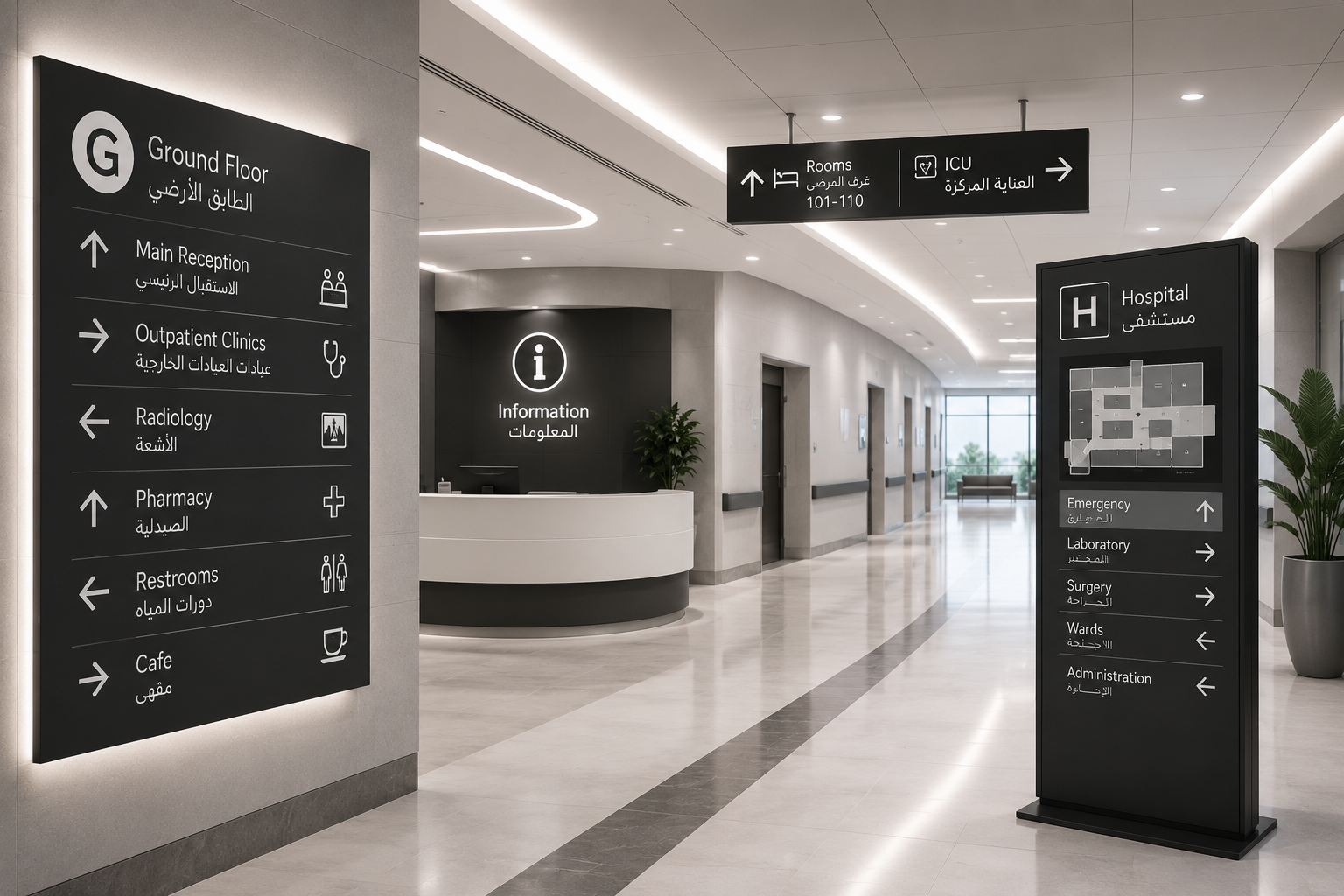
Hospital wayfinding design is a strategic approach to planning signs, maps, directories, colour-coded zones, and digital navigation systems to help patients, visitors, and healthcare staff navigate medical facilities with ease. In hospitals, where timely navigation can directly impact patient experience and operational efficiency, an effective wayfinding system is far more than directional signage; it is an essential part of the healthcare environment.
Whether someone is visiting a hospital for the first time or during an emergency, finding the right place can be confusing. Poor navigation can cause stress, delays, and missed appointments. A well-designed hospital wayfinding system makes it easier for patients, visitors, and staff to navigate, improves accessibility, supports emergency response, and creates a better overall experience. In this guide, we'll explain the basics of hospital wayfinding design, its key elements, common challenges, the implementation process, and best practices for creating a navigation system that is simple, clear, and user-friendly.
What is Hospital Wayfinding Design
Hospital wayfinding design is the strategic planning of signage, maps, colour-coded zones, directories, and digital navigation tools that help patients, visitors, and healthcare staff move through a hospital safely and efficiently. It creates a clear and intuitive navigation system that reduces confusion, improves accessibility, and enhances the overall healthcare experience.
It is a comprehensive navigation system that uses signs, maps, environmental graphics, building features, and digital tools to help patients, visitors, and staff easily find their way around the hospital.
The primary purpose of hospital wayfinding design is to simplify navigation, reduce patient stress, improve accessibility, support staff efficiency, and ensure visitors can quickly locate departments and essential services.
Why Wayfinding Matters in Hospitals
Reduces patient stress and anxiety: Clear navigation helps people find their way easily, so they don't have to worry about getting lost while dealing with a health issue.
Saves time: Patients, visitors, and staff can find the right department quickly, which helps to reduce delays for appointments and procedures.
Improves accessibility: Clear wayfinding helps elderly people, people with disabilities, and non-English speakers find their way on their own.
Helps visitors and staff: Easy navigation means staff spend less time giving directions and more time providing patient care.
Enhances emergency response: Clear routes help people evacuate quickly and allow emergency staff to reach patients faster.
Improves patient satisfaction: A smooth and stress-free visit helps patients feel more positive about the care they receive.
Why Hospital Wayfinding is Different from Commercial Wayfinding
Complex layouts: Hospitals often grow over many years, creating large and complex buildings that are harder to navigate than malls or airports.
High-stress environments: Visitors are often stressed or worried, so hospital navigation needs to be simple and easy to follow.
Multiple user groups: Patients, visitors, staff, and vendors all navigate the same space with very different needs and familiarity levels.
Accessibility requirements: Hospitals must be easy to navigate for people with disabilities, limited mobility, vision impairments, or medical equipment.
Emergency preparedness: Clear directions are needed not only for finding places but also for quick evacuations and emergency response.
Essential Elements of an Effective Hospital Wayfinding System
Clear Signage Hierarchy: Organises information from building to room, making it easier to decide where to go at each step.
Colour-Coded Navigation: Uses different colours for each zone or department, making it easier for visitors to find their way.
Department Identification: Clearly labelled department names and numbers help visitors find and recognise the right place.
Universal Symbols & Pictograms: Clear, standard icons make it easy for visitors to find key facilities, even if they speak different languages.
Maps & Directories: Well-placed maps help visitors understand the building and navigate with confidence.
Accessible Signage: Features like Braille, tactile text, and high-contrast lettering help all visitors navigate the building.
Digital Wayfinding Solutions: Interactive kiosks, mobile apps, and real-time directions provide personalised, step-by-step navigation.
Consistent Visual Design: Using the same fonts, colours, and icons on all signs helps visitors navigate with confidence and reduces confusion.
Why Hospital Wayfinding Fails
There are several reasons why hospital wayfinding fails; even the best-designed hospitals can experience navigation issues if their wayfinding system is not carefully planned and maintained. Common mistakes can confuse patients, delay care, and reduce the overall efficiency of the healthcare facility.
Poor Planning: A hospital's wayfinding system should be planned from the beginning. Without proper planning, signs and navigation can become confusing and hard to follow.
Inconsistent Signage: Using different colours, fonts, symbols, or names throughout the hospital can confuse people. Consistent signs make it easier to recognise directions and find the way with confidence.
Information Overload: Signs with too much text or too many directions can confuse patients and visitors. Clear and simple messages make signs easier to read and help people find their way.
Poor Placement: Signs that are hidden, poorly placed, or installed too high or too low can be missed easily. Proper placement helps people get directions at the right time.
Ignoring Accessibility: Signs that are hidden or placed too high, too low, or in the wrong location can be easily missed. Placing signs where people need them most helps them find their way more easily.
Lack of Maintenance: Damaged, outdated, or missing signs can confuse people and make the wayfinding system less reliable. Regular checks and updates keep the information accurate and easy to trust.
How to Design & Implement Hospital Wayfinding Signage
To create a successful hospital wayfinding signage system, comprehensive planning, user-oriented design, and regular maintenance are required. Following a structured approach helps create a navigation system that is clear, accessible, and easy for patients, visitors, and staff to use.
Assess User Needs: Identify how patients, visitors, and hospital staff move through the hospital. Knowing their navigation needs and challenges helps create an easy-to-use wayfinding system.
Analyse the Hospital Layout: Study the hospital layout, including entrances, departments, corridors, elevators, and key decision points, to identify where signs are needed. A clear understanding of the layout helps create an effective wayfinding system.
Develop a Wayfinding Strategy: Create a clear and consistent navigation plan using signs, colours, symbols, and simple names. This helps people find their way easily from the entrance to their destination.
Design the Signage System: Design signs that are easy to read, consistent, and accessible. Use clear fonts, simple symbols, and high-contrast colours to make them easy to see and understand.
Install & Test the System: Place signs at important decision points and test the system with real users. Their feedback helps identify confusing areas and improves the wayfinding system.
Monitor and Update Regularly: Regularly check and update signs when the hospital layout, departments, or facilities change. This keeps the wayfinding system accurate, reliable, and easy to navigate.
Best Practices for Hospital Wayfinding Design
Keep Messaging Simple: Use short, simple words instead of medical terms so people can quickly understand signs, even in stressful situations.
Use Consistent Branding: Use the hospital's colours, fonts, and logo on all signs so they look consistent and easy to recognise.
Design for Accessibility: Ensure compliance with ADA standards by incorporating appropriate contrast, font sizes, tactile features, and mounting heights for all users, regardless of ability.
Place Signs Before Decision Points: Place signs before intersections, elevators, and hallways so people have enough time to read them and choose the right direction.
Incorporate Digital Navigation: Add mobile apps or kiosks along with signs to help people navigate complex routes in real time.
Test with Real Users: See how patients and visitors actually navigate the space and identify confusing points.
FAQs
What is hospital wayfinding design?
Hospital wayfinding design is a navigation system that uses physical signs, maps, colour-coded zones, and digital tools. It helps patients, visitors, and healthcare staff navigate complex medical facilities easily, safely, and without confusion.Why is wayfinding important in hospitals?
Clear wayfinding helps visitors find their way easily, which reduces stress and confusion. It saves time, prevents appointment delays, and lets medical staff focus on patient care instead of giving directions.What are the main components of a hospital wayfinding system?
Key elements include clear signs, colour-coded zones, easy-to-read department labels, and universal symbols. It also includes accessible features like Braille, digital kiosks, and a consistent design throughout the facility.How does hospital wayfinding improve patient experience?
It helps patients easily find their way from the entrance to their destination, making their visit smoother and less stressful. By supporting easy and accessible navigation for everyone, it improves the overall experience at the healthcare facility.What types of signage are used in hospitals?
Hospitals rely on directional signs, department identification markers, regulatory safety notices, and interactive digital kiosks. Accessible signage, including tactile lettering and high-contrast Braille plates, is also standard practice to assist all mobility levels.Can digital wayfinding improve hospital navigation?
Yes, digital tools like mobile apps and interactive kiosks provide real-time, step-by-step directions. They work with physical signs to help people navigate complex routes and change layouts more easily.
Conclusion
A well-designed hospital wayfinding system is more than just a set of directional signs. It plays an important role in helping patients, visitors, and staff move around the facility with ease. Clear signs, easy-to-understand colour coding, universal symbols, and digital navigation tools make large and complex hospitals easier to navigate.
Careful planning, proper sign placement, and regular maintenance help ensure the system works effectively for everyone, including people with different languages, abilities, and accessibility needs. A good wayfinding system reduces confusion, lowers stress, prevents delays, and improves the overall hospital experience. As healthcare facilities continue to grow and change, investing in simple and intuitive navigation will remain essential for providing safe, efficient, and patient-centred care.
