

Architectural Signage vs. Directional Signage for Hotels
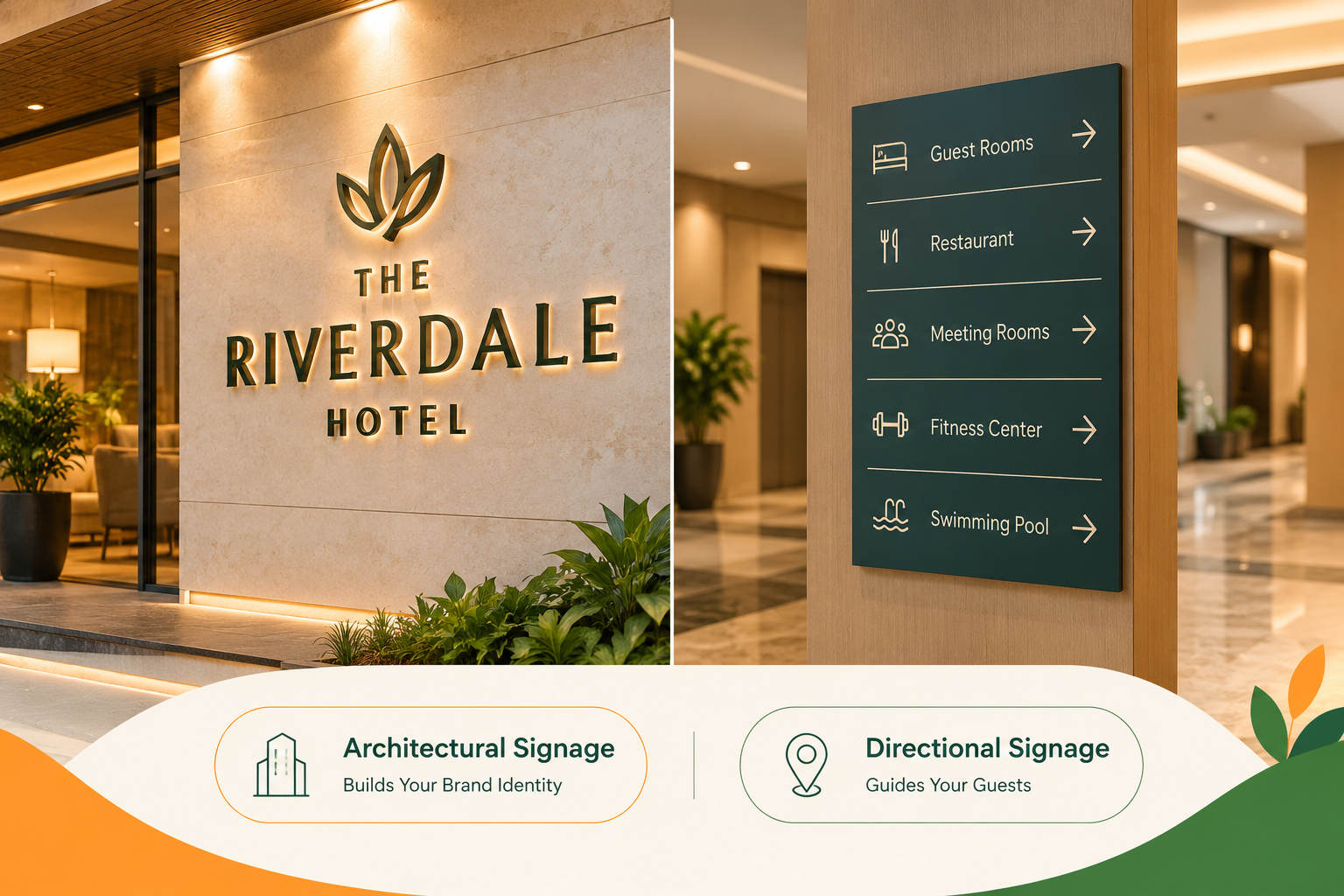
Hotel signage does more than display names and directions. It helps guests understand a property, find important destinations, and move through unfamiliar spaces with confidence. In large hotels, where guest rooms, restaurants, meeting facilities, and recreational areas may be spread across several floors or buildings, signage becomes an essential part of the visitor experience.
Two important categories are architectural signage for hotels and directional signage for hotels. Although they can work together, they serve different purposes. Architectural signage often identifies places and complements the building's design, while directional signage guides people towards their destinations.
Understanding the difference helps hotel owners, architects, and designers create a signage system that is both visually consistent and easy to navigate.
What Are Hotel Directional Signs?
Hotel directional signs guide guests from one location to another. They provide information about which route to follow, where to turn, or which floor to access.
These signs are especially important in large properties where visitors may be unfamiliar with the layout. Common examples include:
- Signs directing guests towards reception or the lobby
- Arrows pointing towards lifts and staircases
- Signs guiding visitors to restaurants, spas, and fitness centres
- Floor directories showing the locations of rooms and facilities
- Outdoor signs directing guests from parking areas to hotel entrances
The main purpose of directional signage is to help people make navigation decisions at the right time.
For example, a sign at a corridor intersection might direct guests towards the ballroom on the right and the guest-room lifts on the left. Without that information, visitors may need to stop, retrace their steps, or ask staff for assistance.
What Is Architectural Signage for Hotels?
Architectural signage for hotels is signage designed to work with a building's architecture, interior design, and overall visual identity. It can identify locations, communicate information, and contribute to the appearance of a space.
Architectural signs may be integrated into walls, façades, reception areas, corridors, or other parts of the built environment. Examples include:
- Hotel name and entrance signs
- Reception and concierge identification signs
- Room-number signs
- Restaurant and facility name signs
- Building directories and floor identification signs
- Signs incorporated into architectural features or interior finishes
Architectural signage can be decorative as well as functional, but its appearance should never make essential information difficult to understand.
For instance, a luxury hotel might use metal lettering, carefully selected materials, and subtle illumination to complement its interior design. The sign should still be readable and clearly identify the intended destination.
Architectural Signage vs. Directional Signage: Key Differences
The main difference lies in the information each sign communicates.
| Feature | Architectural Signage | Directional Signage |
|---|---|---|
| Primary purpose | Identifies places and complements the built environment | Guides people towards destinations |
| Typical information | Hotel names, room numbers, facility names, and building identification | Directions, arrows, routes, and destination locations |
| Common locations | Entrances, façades, reception areas, rooms, and facility entrances | Corridors, intersections, lift lobbies, parking areas, and route changes |
| Design focus | Integration with architecture, materials, finishes, and visual identity | Clarity, visibility, readability, and timely guidance |
| Example | A sign identifying the hotel's restaurant | An arrow directing guests towards the restaurant |
These categories can overlap. A hotel directory, for example, may be architecturally integrated into a lobby wall while also providing directional information.
The important consideration is whether guests can easily understand the information and use it to navigate the property.
How Directional Signage Supports Hotel Navigation
Effective hotel navigation depends on giving visitors clear information throughout their journey. Directional signs are particularly useful at locations where people must choose between multiple routes.
Guiding Guests Through Complex Layouts
Large hotels may have multiple wings, floors, corridors, and interconnected facilities. Directional signs help guests understand how these areas connect. For example, a conference attendee arriving at the lobby should be able to identify the route to the meeting rooms without needing to explore several corridors.
Improving Navigation Between Floors
Signs near lifts and staircases can explain which destinations are available on each floor. Floor directories and corridor signs can then guide guests towards specific rooms or facilities. Consistent floor numbering and room identification make this information easier to follow.
Connecting Indoor and Outdoor Areas
Resorts and hotels with multiple buildings may require signs along outdoor paths, gardens, parking areas, and covered walkways. These signs help guests move between accommodation, dining facilities, event spaces, and recreational areas.
How Architectural Sign Design Shapes the Guest Experience
Architectural sign design should consider both the building's visual character and the practical needs of its visitors.
Complementing the Hotel's Architecture
Signage materials, colours, finishes, and mounting methods can be selected to complement the surrounding environment. For example:
- A contemporary hotel may use clean typography and minimal sign layouts.
- A heritage property may use materials and finishes that respect its architectural character.
- A resort may incorporate natural textures while maintaining sufficient contrast and readability.
The design should feel connected to the space without making signs difficult to notice.
Identifying Important Destinations
Architectural signage helps guests recognise when they have reached a particular location. A clearly identified restaurant entrance, spa reception, or conference room confirms that visitors are in the right place. This is especially useful when several facilities have similar entrances or are arranged along the same corridor.
Maintaining Visual Consistency
A coordinated signage system uses consistent typography, symbols, colours, and naming conventions. This makes signs easier to recognise throughout the property.
Consistency also helps prevent confusion. If a facility is called the "Fitness Centre" on one sign, using the same name on directories and other signs helps guests connect the information.
Hotel Identification Signs and Their Role
Hotel identification signs tell visitors what a particular place or facility is. They differ from directional signs because they confirm a location rather than primarily explaining how to reach it. Common examples include:
- Hotel entrance identification
- Guest-room numbers
- Restaurant and bar names
- Restroom identification
- Meeting-room names
- Staff-only and restricted-area signs
Identification signs are most useful when positioned where guests expect to confirm their destination, such as beside a room entrance or at the entrance to a facility.
They should be easy to read and use terminology that matches the hotel's directories and other navigation information.
Combining Architectural and Directional Signage
Hotels generally need both types of signage to create a complete navigation experience. Consider a guest travelling from the hotel entrance to a conference room:
Entrance Signage
Identifies the hotel and confirms the correct building.
Directional Signage
Guides the guest towards reception or the conference facilities.
A Floor Directory
Explains which level contains the required room.
Corridor Signs
Guide the guest along the correct route.
An Identification Sign
Confirms the conference room at the destination.
Each sign provides a different piece of information. Together, they create a connected journey rather than a collection of unrelated signs.
When planning this system, designers should consider guest journeys, important decision points, viewing distances, lighting, accessibility, and the relationship between signs and architectural features.
Modern Trends in Hotel Signage Design
Hotel signage continues to evolve as properties respond to changing guest expectations and technology.
Digital Directories and Displays
Digital displays can provide directions, event schedules, and facility information. They are particularly useful in conference hotels where room assignments or event details may change frequently.
QR Codes and Mobile Information
QR codes can link guests to digital maps, facility details, or additional information. They should supplement rather than replace essential physical signs, ensuring that visitors still have a usable navigation option without a smartphone.
Accessibility-Focused Signage
Accessible signage considers readable typography, sufficient contrast, clear placement, and the needs of people with different abilities. Tactile information and Braille may be required in certain applications, depending on relevant standards and regulations.
Flexible Signage Systems
Hotels may benefit from modular sign components or adaptable digital displays when facilities, room names, or layouts change. Any updates should be reflected consistently across the signage system.
Common Hotel Signage Mistakes to Avoid
Even attractive signs can cause problems when their information or placement is unclear. Avoid:
- Using decorative fonts that are difficult to read
- Placing directional signs after guests have passed a turning point
- Using inconsistent names for the same destination
- Overloading signs with too much information
- Allowing architectural features or furniture to obstruct signs
- Ignoring accessibility requirements
- Failing to update signs after renovations or changes to facilities
Regular signage reviews can help hotels identify outdated information, confusing routes, and signs that are difficult to see.
Frequently Asked Questions
What is the difference between architectural and directional signage in hotels?
Architectural signage identifies places and complements the building's design. Directional signage guides guests towards destinations using information such as arrows, routes, and destination names. Some signs can perform both functions.
What are examples of hotel directional signs?
Examples include signs directing guests towards lifts, guest rooms, restaurants, conference facilities, restrooms, parking areas, and recreational amenities.
What is architectural signage used for in hotels?
Architectural signage can identify the hotel, rooms, restaurants, meeting spaces, and other facilities. It can also complement the building's architecture through its materials, finishes, typography, and placement.
Why are hotel identification signs important?
Hotel identification signs confirm that guests have reached the correct room, facility, or destination. Clear identification reduces uncertainty and supports a more understandable navigation experience.
Can one sign be both architectural and directional?
Yes. A directory integrated into a lobby wall may complement the interior architecture while also directing guests towards different facilities. The sign's information should remain clear and easy to use.
Where should directional signage be placed in a hotel?
Directional signs are commonly placed near entrances, lift lobbies, corridor intersections, staircases, parking areas, and other decision points. They should provide guidance before guests need to choose a route.
How can hotels make signage accessible?
Hotels can consider readable text, adequate contrast, clear placement, familiar symbols, and accessible route information. Tactile signs or Braille may also be needed in applicable locations. Design should follow relevant accessibility standards and local regulations.
Should hotels use digital signage instead of physical signs?
Digital signage can support changing information, event schedules, and interactive navigation. However, physical signs remain important for dependable, immediate guidance. A combination can serve guests with different preferences and accessibility needs.
Conclusion
Architectural signage and directional signage serve different but complementary roles in hotels. Architectural signage identifies spaces and can reinforce the building's visual character, while directional signage helps guests choose routes and reach destinations.
A coordinated hotel signage system brings these elements together through consistent information, thoughtful placement, readable design, and accessible navigation. When signage is planned around how people actually move through a property, it can make even a large and complex hotel easier to understand and navigate.
